The short answer: 3 to 4 inches
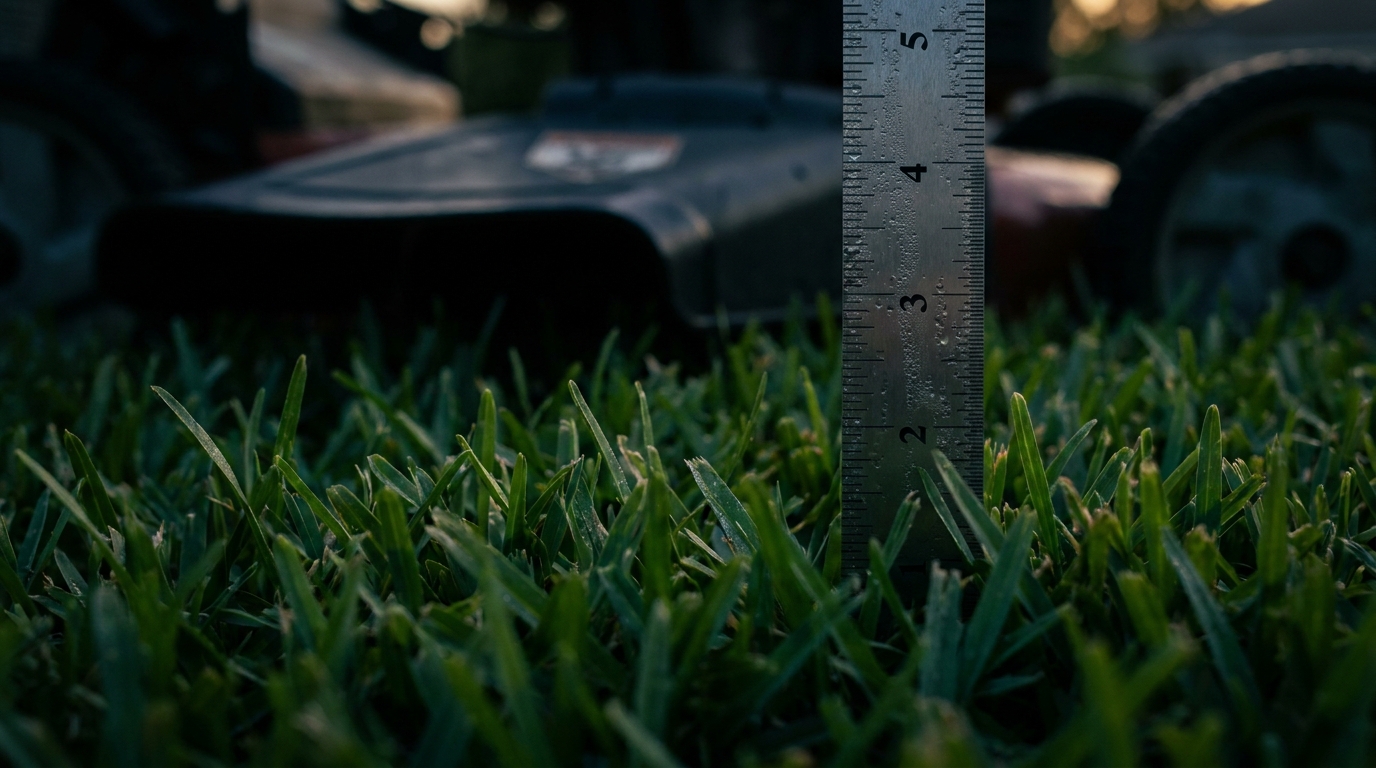
Most St. Augustine lawns in Central Florida should be cut at 3 to 4 inches. That is the range UF/IFAS turf guidance points to for standard cultivars. Some dwarf cultivars are bred to handle a lower cut, around 2.5 inches, but they are the exception.
If you do not know which cultivar you have, stay at the taller end. Cutting too high rarely hurts St. Augustine. Cutting too low hurts it fast.
Set the deck on a flat surface and measure from the ground to the blade. The number printed on a mower lever is not always the height you actually get.
Why taller grass is a stronger lawn
Blade height and root depth are connected. When you leave more leaf, the plant makes more energy and pushes roots deeper into the sand. Deeper roots reach water longer after a rain, so the lawn wilts later in a dry stretch.
Taller turf also shades the soil. Shaded soil stays cooler and gives weed seeds less light to sprout. A lawn cut at the right height is doing a lot of your weed control for you.
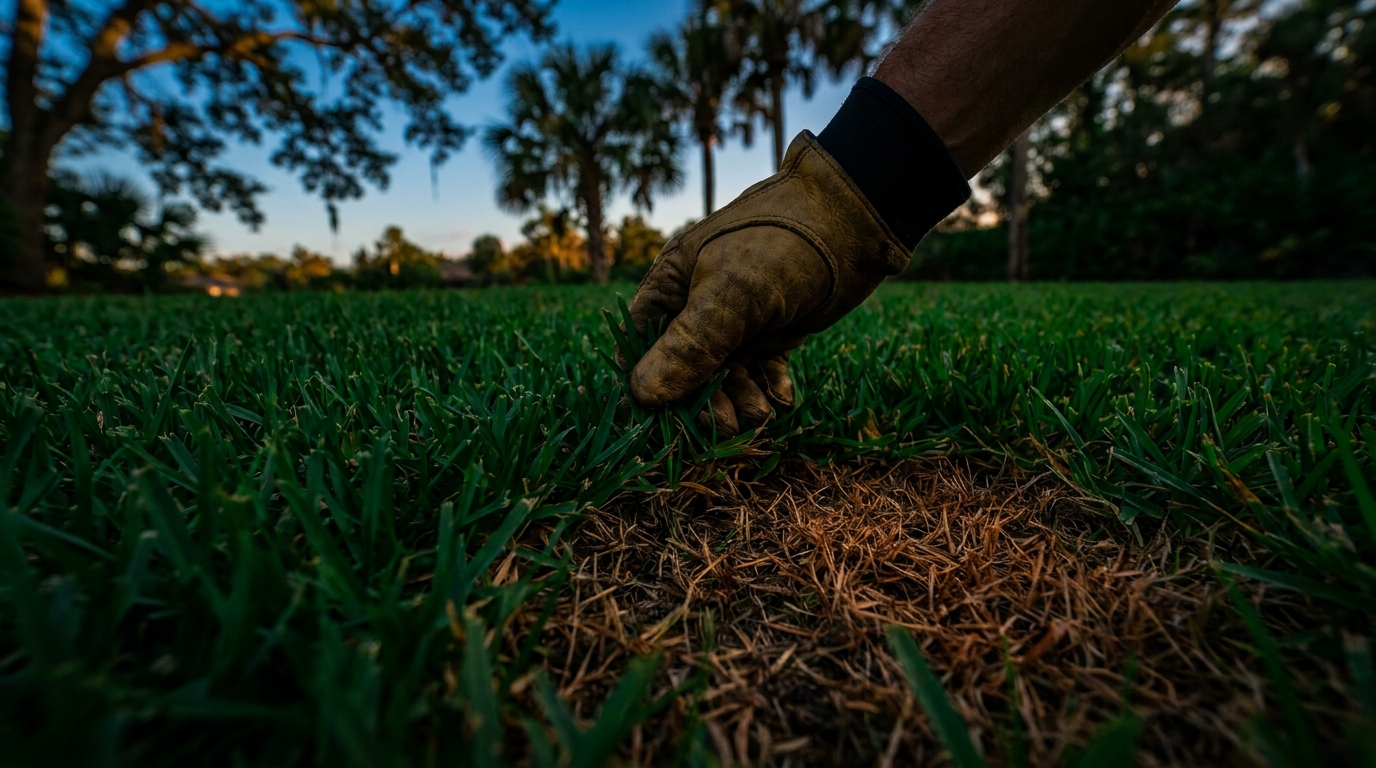
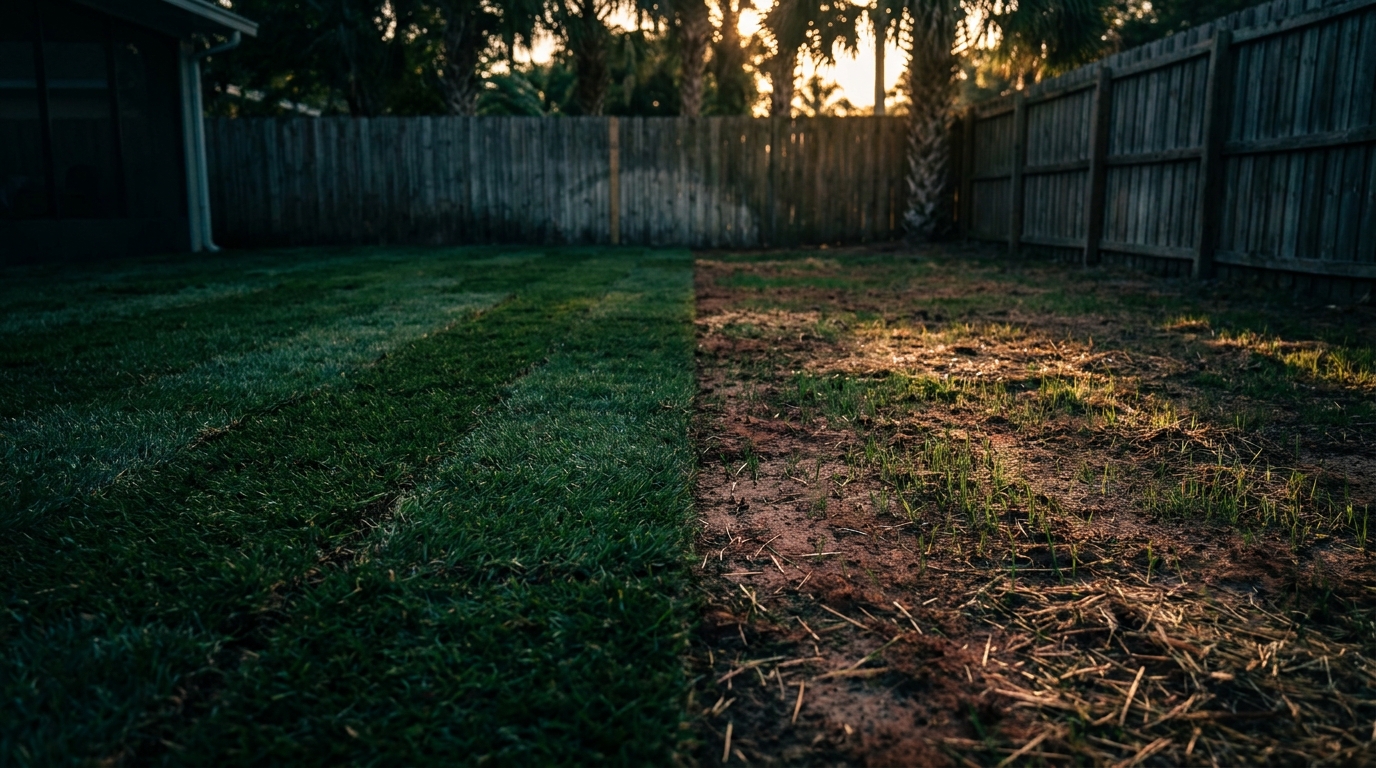
Scalped St. Augustine does the opposite. Roots shrink, the soil bakes, and weeds and chinch bugs find an easy target.
The one-third rule
Never remove more than one third of the blade in a single mow. If your target is 4 inches, cut before the grass passes 6. Taking off more than that shocks the plant and leaves it yellow and stemmy for days.
This is why mowing frequency changes with the season. In the summer growing season, St. Augustine can need a cut every week. In the cooler months, growth slows and the interval stretches out.
If the lawn got away from you, bring it down in steps over a couple of mows. One hard cut to fix an overgrown yard usually does more damage than the overgrowth did.
Sharp blades and clean cuts
A sharp blade slices the leaf. A dull blade tears it, and the torn tip turns brown within a day or two. From the street, a lawn cut with dull blades looks faintly tan even when it is healthy.
Torn tips are also open wounds. They lose more water and give disease an easier way in, which matters in a humid Florida summer.
Blades should be sharpened on a schedule, not when someone happens to notice. Leaving clippings on the lawn is fine as long as they are not left in clumps or blown into the street.
Want it cut at the right height every time
Corso crews set the deck to your turf type and keep blades sharpened on a schedule. Same crew, same height, every visit.
If you want your lawn on that routine, send us a few details through the quote form at /#quote and we will get back to you with a plan for your property.