St. Augustine does not come from seed
The most common lawn grass in Central Florida cannot be grown from seed. St. Augustine is established with sod or plugs. If you want a St. Augustine lawn, seed is not an option.
That alone settles the question for a lot of homeowners. Most neighborhood lawns here are St. Augustine, and patching or replacing them means sod.
Why seed struggles here
Florida sandy soil drains fast and holds little moisture near the surface. Seed has to stay damp to germinate, which means frequent watering for weeks.
Then there is the weather. A heavy summer storm can wash seed into piles or off a slope entirely. Birds eat it. Weeds sprout in the bare soil faster than the grass does.
Even when seed takes, it can be a long time before the lawn fills in enough to walk on, mow regularly or look finished.
What sod gets you
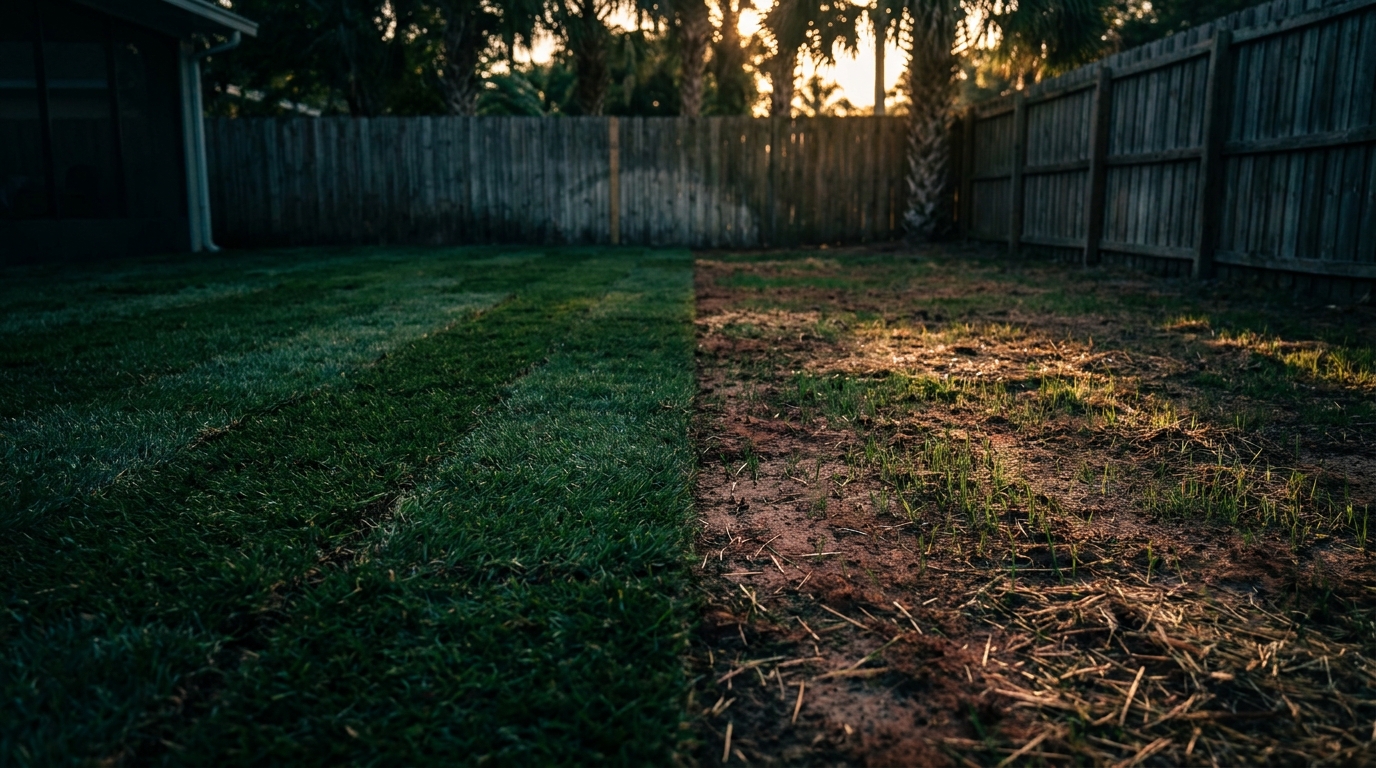
Sod is a finished lawn on day one. The soil is covered immediately, so there is far less erosion, mud and open ground for weeds.
It roots in quickly when it is laid on prepared soil and watered properly. Once established, it can be mowed and used like any other lawn.
The trade-off is that sod costs more up front than seed and has to be laid soon after it arrives. It also needs a disciplined watering plan in the first weeks.
When seed has a place
Bahia can be seeded, and seed can make sense for large, low-traffic areas where a finished look is not urgent, like the back of a large lot or a field.
Some other grasses can be seeded as well. But for a front yard, a home being sold, an HOA common area or a commercial property, the slow and uneven fill of seed is usually the wrong trade.
Thinking about new turf
Corso installs St. Augustine, Zoysia and Bahia sod with full prep: old turf stripped, soil graded and amended, pallets laid tight and rolled, and a watering plan to get it established.
If you are weighing sod for your property, start with the quote form at /#quote and tell us the area and grass you have in mind.