Water when the lawn asks, not on autopilot
UF/IFAS guidance is to water as needed, not on a fixed daily schedule. A lawn that gets a little water every day grows shallow roots and stays dependent on the sprinklers.
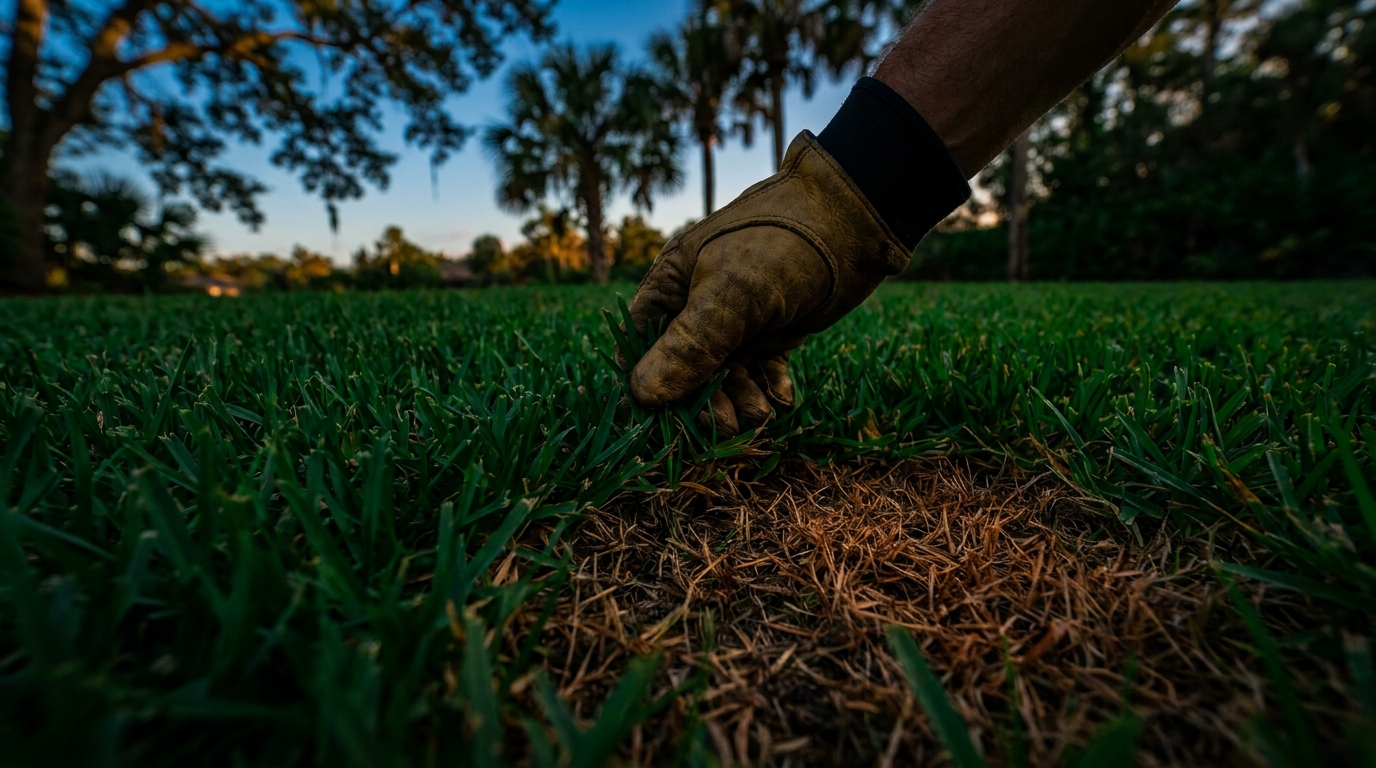
The lawn tells you when it is thirsty. Leaf blades fold in half lengthwise, the color shifts toward blue-gray, and footprints stay pressed into the grass instead of springing back.
When you see those signs across a good part of the lawn, water. When you do not, leave the system off.
How much to put down
Apply about half to three quarters of an inch per watering. That is enough to wet the root zone in sandy Florida soil without pushing water past the roots.
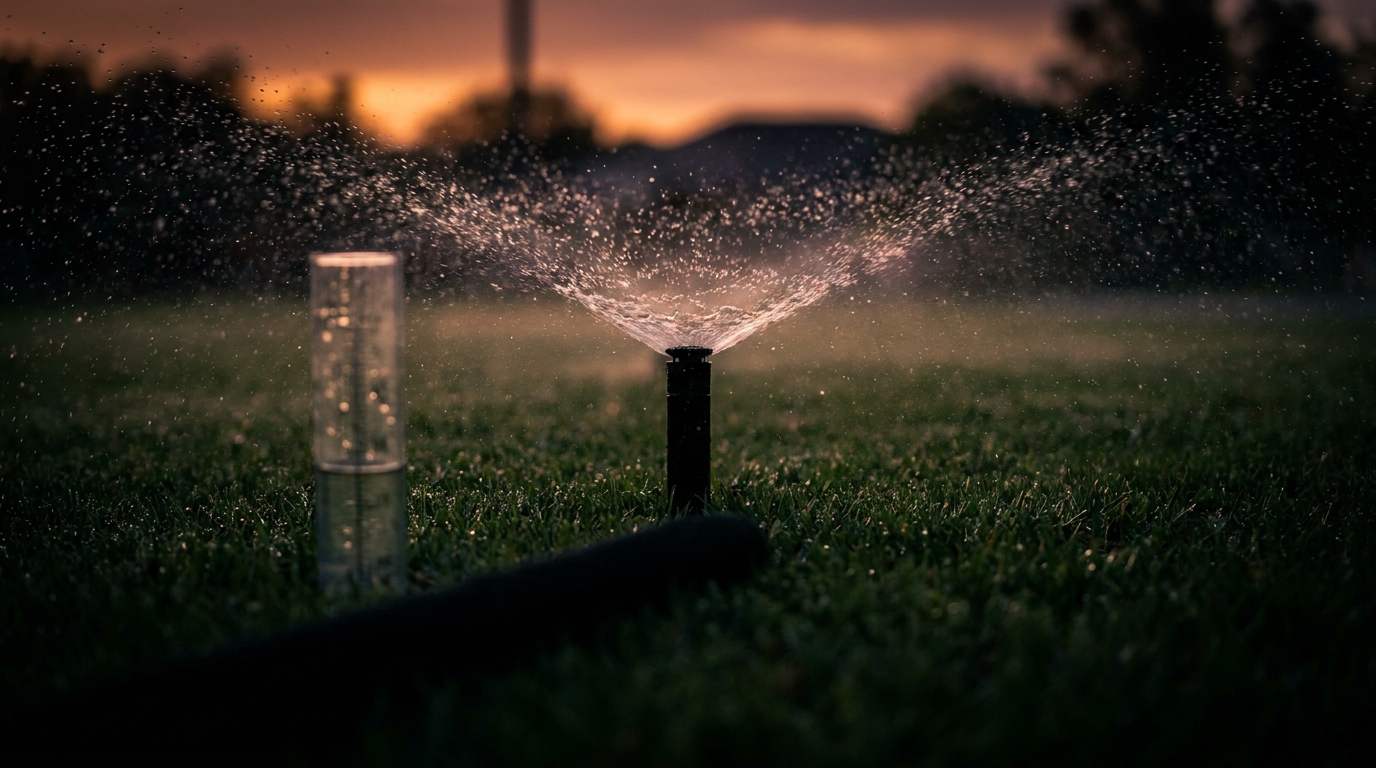
Your timer does not know what an inch is, so measure it. Set a few flat-bottomed cans around one zone, run it for a set time, and check the depth. Repeat for each zone, because sprays and rotors put down water at very different rates.
Once you know how long each zone takes to deliver the right amount, set the run times to match and stop guessing.
Early morning is the right time
Water in the early morning, before the heat builds. Less water is lost to evaporation and wind, and the grass dries off as the sun comes up.
Evening watering leaves the blades wet all night. In a warm, humid climate, that is an invitation to fungus.
Midday watering is mostly wasted. A lot of it evaporates before it reaches the roots.
Rain counts, and winter needs far less
Every rain is a watering. If a summer storm put down a good soaking, skip the next scheduled cycle. Florida requires automatic systems to have a working rain sensor or shutoff device, and it should be checked so it actually does its job.
Overwatering does real damage. Constantly wet soil feeds dollarweed and sedge, starves roots of oxygen and sets up root rot and fungus.
In the cooler months, warm-season grass slows way down and needs far less water. Many systems are set once in summer and never adjusted, which means they overwater all winter.
Check your county's watering rules
Most of Central Florida falls under watering restrictions set by the water management district, the county or the local utility. They usually limit which days and hours you can irrigate, and the rules can change with the season.
Look up the current schedule for your county or utility before you program the timer. Rules vary by address, so a neighbor in the next town may be on a different schedule than you.
Want your system set to your lawn
Corso tunes irrigation zone by zone so each area gets what it needs and nothing more. That includes checking heads, run times and the rain sensor.
If your lawn has dry spots, soggy spots or a timer nobody has touched in years, tell us about it through the quote form at /#quote.