Diagnose before you treat
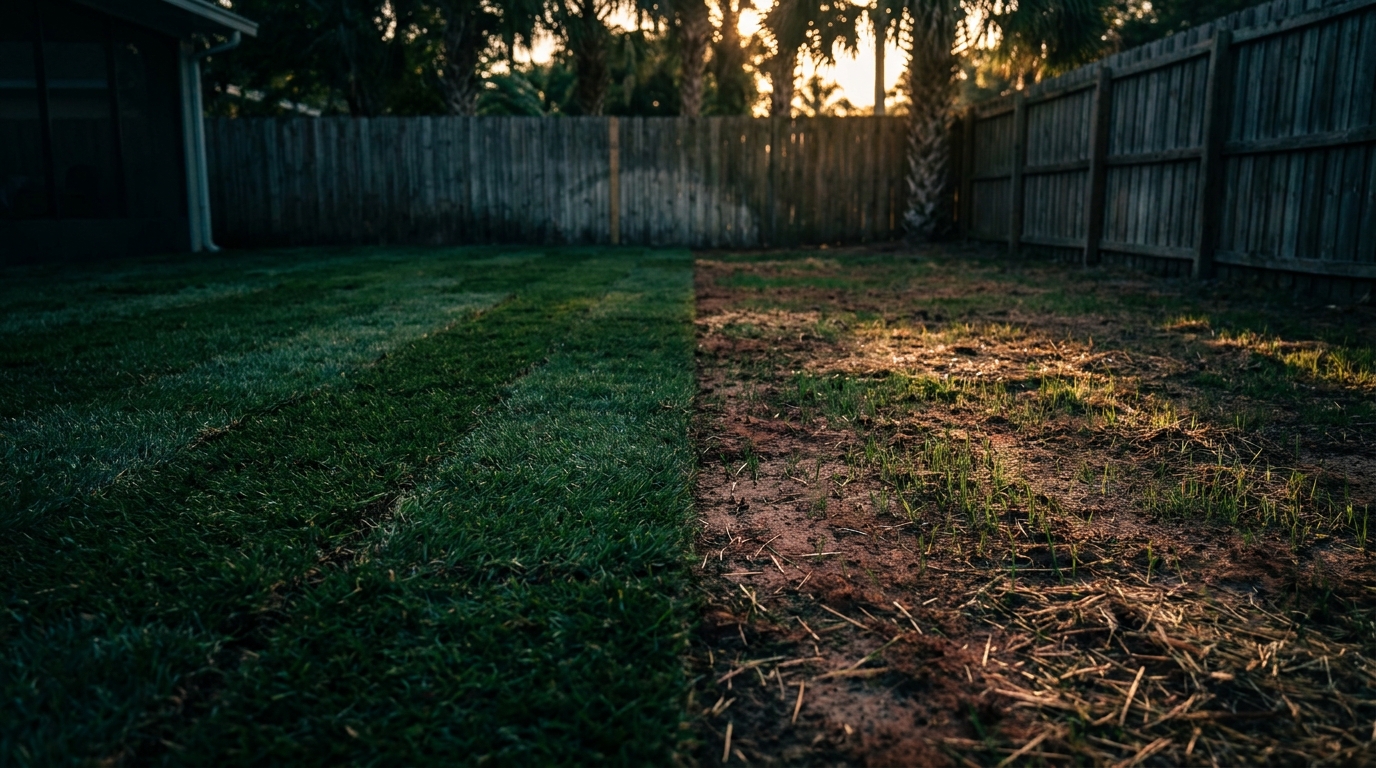
Brown patches in a Florida lawn have three common causes: insects, disease and water. They can look alike from the porch, and the fix for one can make another worse.
Spraying insecticide on a fungus does nothing. Watering more to fix a fungus can feed it. Look closely first, then act.
Note where the patch is, when it showed up, what shape it has and what the edges look like. Those four details usually point to the cause.
Chinch bugs: hot, sunny, spreading
Chinch bugs are a major St. Augustine pest in Florida. They tend to start in the hottest, sunniest spots, often along driveways, sidewalks and curbs where the pavement adds heat.
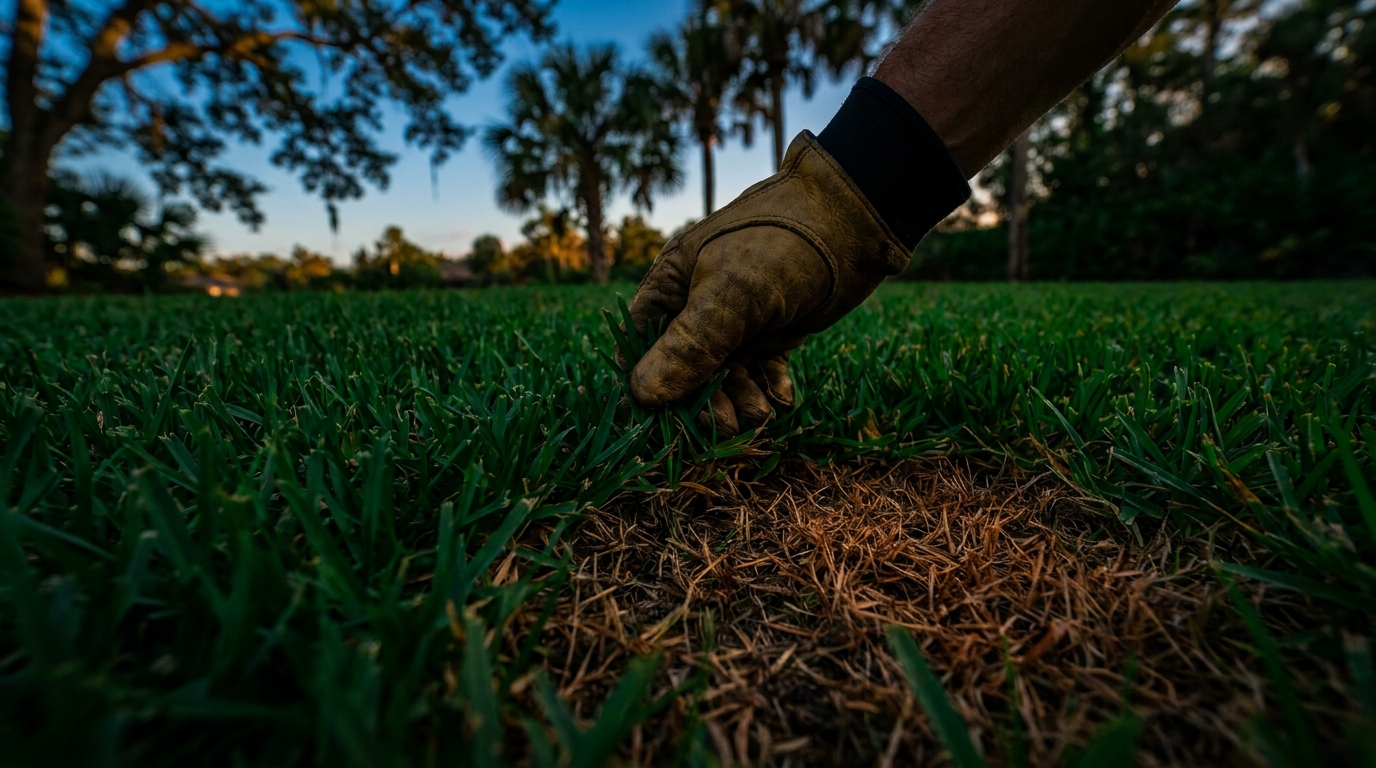
Damage shows as grass turning yellow, then reddish-brown, then dead, and the patch grows outward over time. It is easy to mistake for drought stress, but watering does not bring it back.
To check, part the grass at the edge of the damage where green meets brown and look down at the soil line. Chinch bugs are tiny and move fast. You can also push an open-ended can into the turf, fill it with water and watch for bugs floating up.
Fungus: gray leaf spot, take-all and large patch
Gray leaf spot shows up in humid summers, especially on St. Augustine that is overwatered, over-fertilized or newly laid. Look for small gray spots with darker borders on the blades, and a lawn that looks scorched.
Take-all root rot hits stressed turf. The grass yellows and thins, and when you pull a plant up, the roots are short, dark and rotted. It is often tied to too much water, too-low mowing or other stress.
Large patch is a cool-season disease. It appears in the cooler, wetter months as roughly circular patches, often with an orange or bronze ring at the edge where it is still active.
Thirst: dry zones that follow the sprinklers
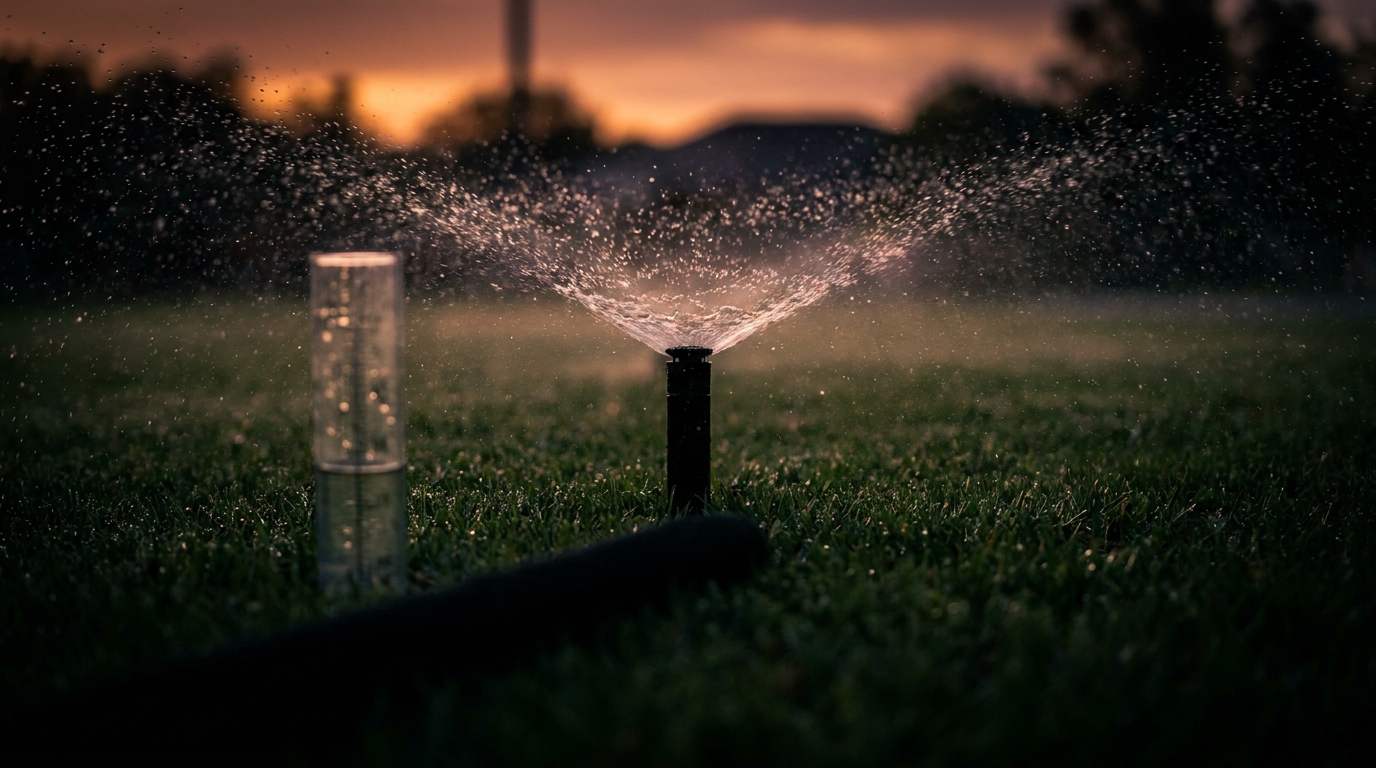
If the brown areas line up with gaps in sprinkler coverage, the cause is probably water. Look for patches between heads, at the edge of a zone or where a head is blocked by a plant or tilted the wrong way.
Drought-stressed grass shows folded blades and a blue-gray tint before it browns. Unlike chinch bug damage, it usually greens up after a good watering or rain.
Sandy Florida soil drains fast, so an area that misses even part of its water can dry out quickly in summer heat.
Fixing the cause, not the symptom
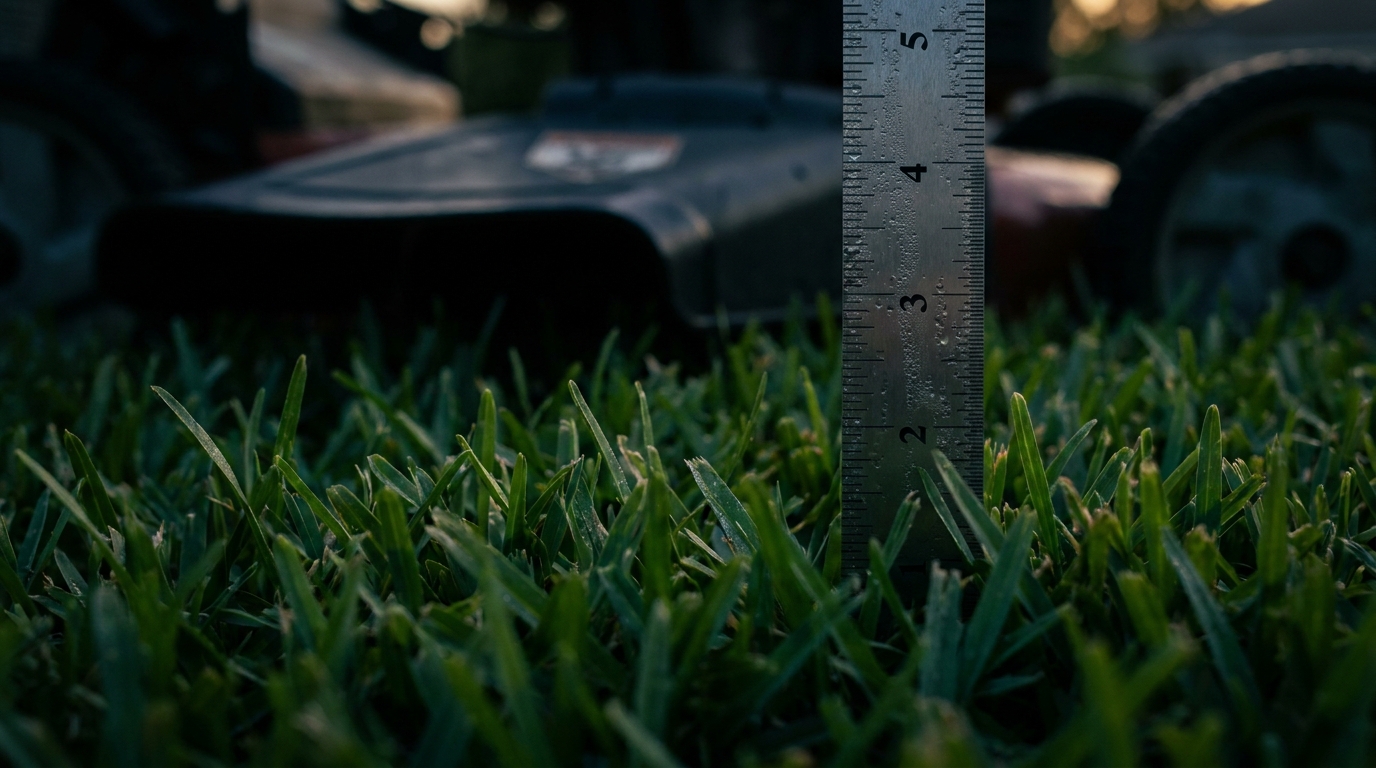
Most of these problems share the same root causes: wrong mowing height, too much or too little water and fertilizer at the wrong time. Correcting those is the long-term fix.
Insect and disease treatments are a short-term tool. They should match the actual problem and be applied by someone qualified to apply them. Dead areas that do not recover may need to be plugged or resodded once the cause is under control.
Not sure what you are looking at
Corso can walk the property, look at the patches and the irrigation, and tell you what is driving the damage. From there we lay out what it takes to fix it.
Send us a few details and photos through the quote form at /#quote.