What mulch actually does
Mulch is not just a finished look. In Florida beds it holds moisture in fast-draining sandy soil, keeps roots cooler in summer and blocks light from weed seeds.
Organic mulches also break down over time and add organic matter to the soil. Florida sand holds little nutrient, so that slow improvement matters.
Depth: two to three inches
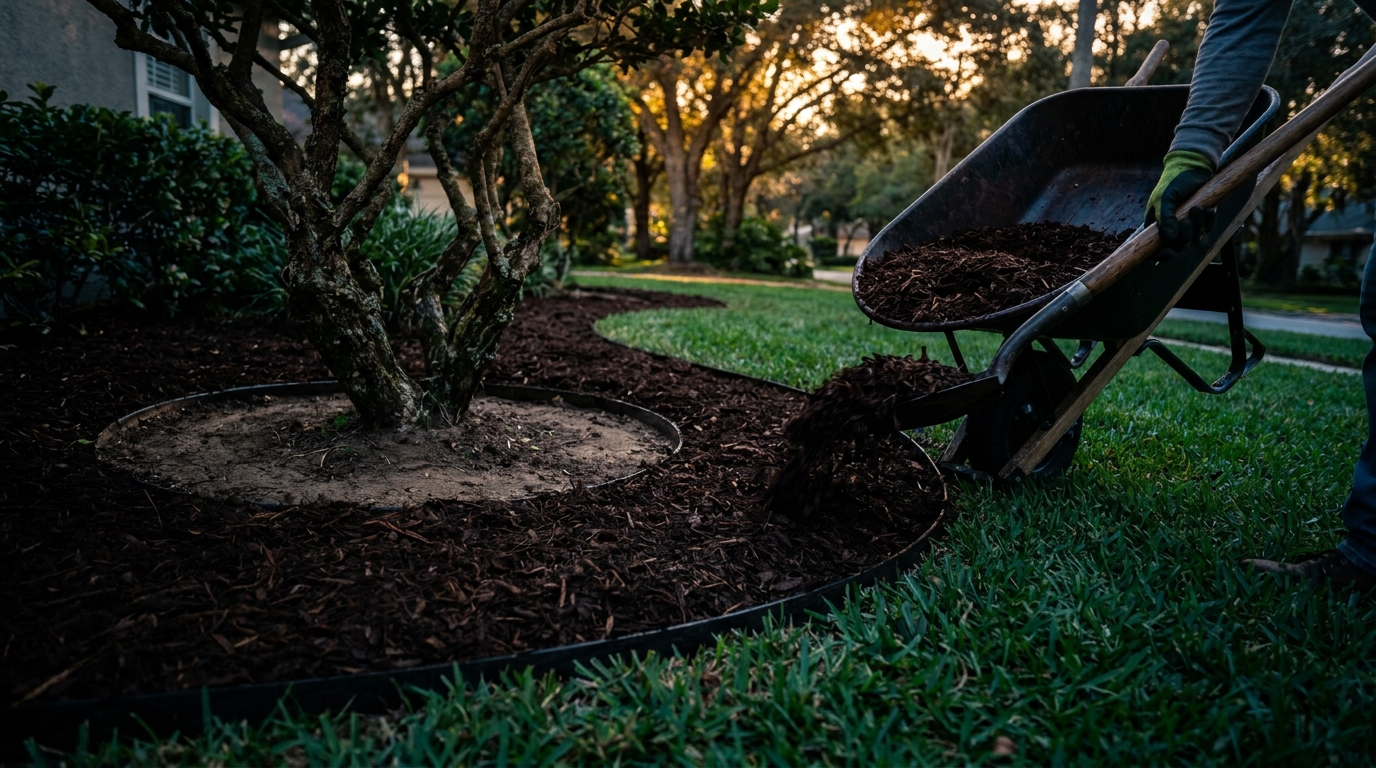
Spread mulch about 2 to 3 inches deep. That is enough to suppress weeds and hold moisture without smothering roots.
Thinner than that and weeds push through. Much thicker and the layer can stay soggy, keep water and air from reaching roots and become a home for pests.
Mulch piles up over years of top-dressing. Before adding more, check how much is already there. Sometimes the right move is to rake out the old layer first.
Keep it off trunks and stems
Pull mulch back a few inches from tree trunks, shrub stems and the base of palms. Mulch piled against bark holds moisture against the plant and can lead to rot and disease.
The mulch volcano, a cone piled up around a tree trunk, is common and harmful. Trees should look like they are coming out of the ground, not out of a mound.
Keep a gap along the house as well, so mulch is not piled against siding or the foundation.
Timing and refresh
Organic mulch breaks down and fades. Refresh it when it gets thin, not on a fixed date. Many properties top up once or twice a year.
Before the summer rainy season and its weed flush is a smart time to make sure beds are covered. Pull existing weeds first. Mulch on top of growing weeds does not stop them.
What to use and what to avoid
Pine bark, pine straw and other wood mulches made from renewable or byproduct sources work well in Florida beds. UF/IFAS has long encouraged alternatives to cypress mulch, which is often harvested from wetlands.
Rubber mulch does not break down or feed the soil, and it holds heat. It is a poor choice for planted beds.
Avoid using fresh grass clippings as bed mulch. They mat down, can smell and may carry weed seed.
Beds that stay sharp
Corso keeps beds shaped, edged and mulched to the right depth, with mulch pulled back where it should be. That is part of how a property stays looking finished between visits.
If your beds need a reset or a regular routine, start with the quote form at /#quote.