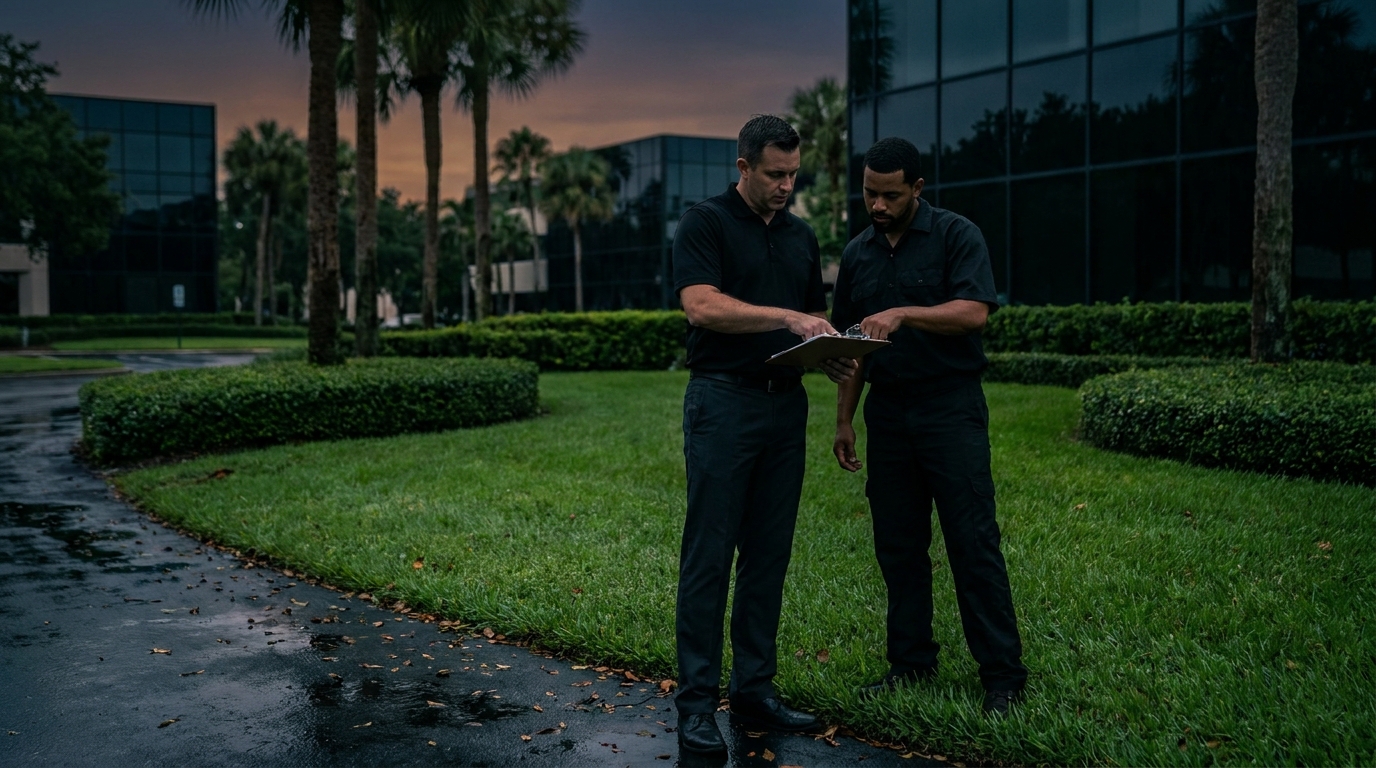
A written scope, item by item
The scope is the heart of the contract. It should list every task: mowing, edging, string trimming, blowing hardscape, bed weeding, shrub and hedge pruning, and litter pickup.
It should also say what areas are covered. Turf, beds, parking lot islands, entries, retention areas and right-of-way strips are often handled differently, and gaps between them are where disputes start.
If a task is not written down, assume it is not included. A vague scope makes the budget look clean and the property look worse.
A service calendar that follows the seasons
Florida turf grows hard in summer and slows down in the cooler months. The contract should show how mowing frequency changes through the year instead of one number for all twelve months.
It should also schedule the periodic work: mulch refresh, palm and tree pruning, irrigation inspections and any seasonal color. Then you can see the year in advance and budget for it.
Fertilizer, pest control and irrigation
Fertilizer and pest control should be spelled out on their own: what is applied, how often and who applies it. In Florida, commercial fertilizer and pesticide application requires the right state certifications or licenses, so confirm whoever does it holds them.
Applications should also follow local fertilizer ordinances, many of which restrict certain products during the summer rainy season.
Irrigation should be clear too. Is there a routine inspection of heads and zones, and how are repairs handled and approved?
Extras, storms and exclusions
Every property has extra work: a broken irrigation main, a dead tree, a section of sod to replace. The contract should say how extras are quoted and approved before work starts.
Storm cleanup matters in Central Florida. Know whether debris removal after a storm is included, billed separately or handled case by case.
A clear list of exclusions protects both sides and keeps surprise invoices off your desk.
Paperwork, reporting and terms
Ask for current certificates of insurance and keep them on file. Know who your single point of contact is and how quickly they respond.
A visit log or service report each cycle shows what was done and when. That is what you need when an owner, tenant or board asks.
Finally, read the term, renewal and termination clauses. You should be able to end the agreement if the work does not meet the written scope.
Get a scope you can hold us to
Corso writes commercial and HOA scopes that list the work, the calendar and the reporting, with one point of contact and one invoice.
If you manage a property and want a scope to review, send us the details through the quote form at /#quote.